
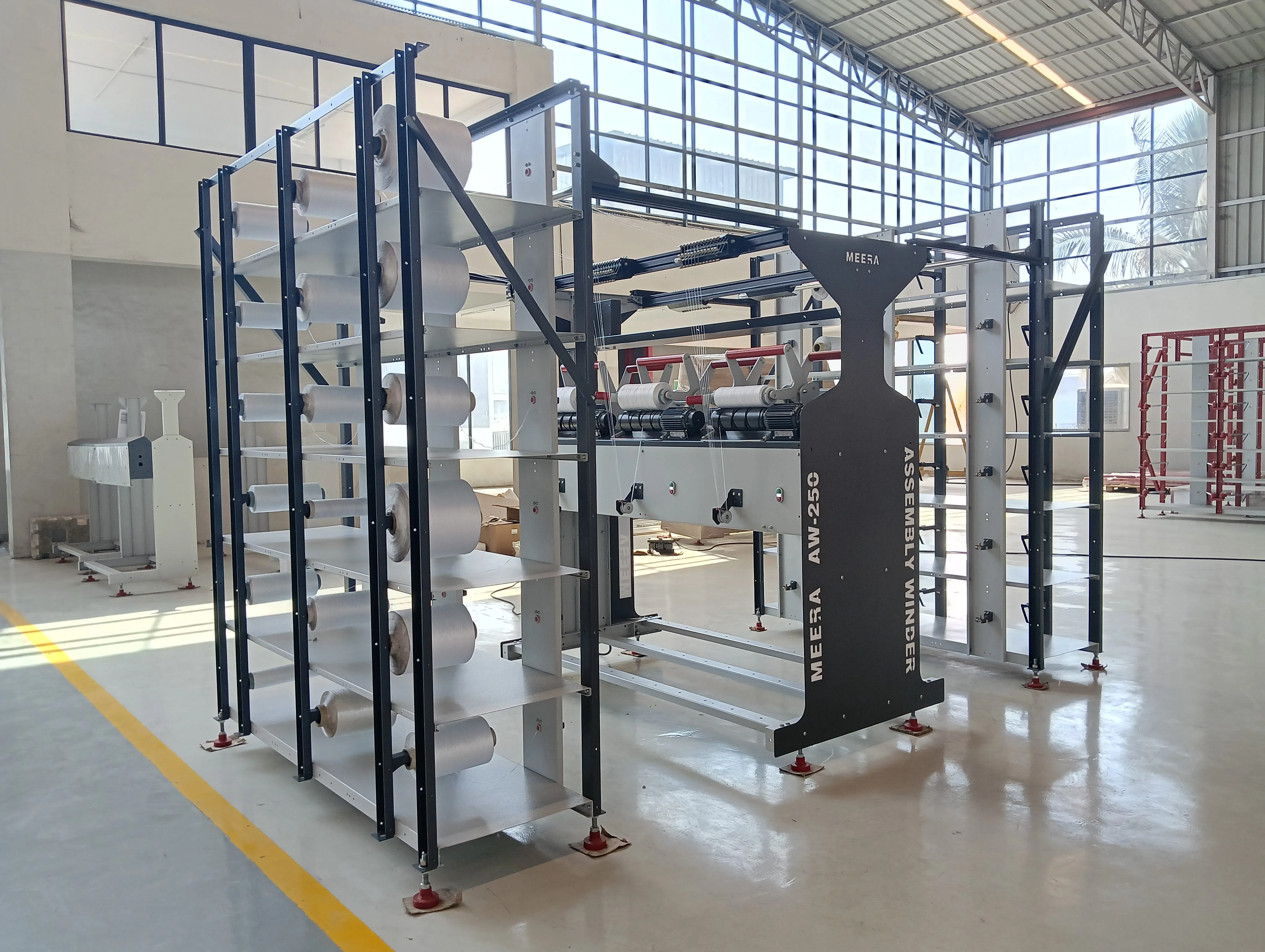
- Nylon twine twisting machines can handle up to 8000 denier cords, ensuring durability.
- Machines comply with ISO 9001 standards, guaranteeing quality and reliability.
- The market for fishing twine machines is growing at 5% annually, driven by demand in Asia.
- Meera offers competitive pricing and robust after-sales support, enhancing customer satisfaction.
- Choose machines with adjustable twist settings for versatile applications.
- Ideal for fishing and packaging industries, offering high tensile strength and flexibility.
- Investing in Meera's machines can yield a 20% increase in production efficiency.
Nylon Twine for Fishing & Packaging: Twist Optimization
Introduction
In the fishing and packaging industries, the quality and performance of nylon twine are paramount. Manufacturers and end-users alike face challenges such as ensuring optimal strength, durability, and efficiency in their operations. A critical factor influencing these attributes is the twisting process of the twine. Utilizing an advanced nylon twine twisting machine can significantly enhance the quality of the final product, leading to improved operational outcomes.
Key Takeaways
Market Growth: The global twister winder market is projected to grow from $14.87 billion in 2025 to $18.99 billion by 2030, at a CAGR of 5.2%.
Technological Advancements: Modern twisting machines incorporate IoT and AI, enabling real-time monitoring and predictive maintenance, thereby enhancing operational efficiency.
Energy Efficiency: Innovations in twisting technology have led to machines that consume up to 40% less energy, reducing operational costs.
Product Quality: Advanced twisting machines produce high-quality, knotless packages, essential for seamless downstream processing.
Versatility: Machines like the TPRS Twister can handle a wide range of deniers, from 100 to 600 denier, catering to diverse industry needs.
Space Optimization: Modern machines are designed with compact footprints, saving up to 40% in space compared to traditional setups.
Labor Efficiency: Automation in twisting machines can lead to a 33% reduction in labor requirements, streamlining production processes.
Understanding Nylon Twine and Its Importance
Nylon twine is a synthetic fiber known for its exceptional strength, elasticity, and resistance to abrasion and chemicals. These properties make it ideal for applications in fishing, where durability against harsh marine environments is crucial, and in packaging, where reliable binding materials are necessary. The performance of nylon twine is significantly influenced by its twist level, which affects tensile strength, flexibility, and knot stability. Therefore, optimizing the twisting process is essential to produce high-quality twine that meets industry standards.
Types of Twisting Machines for Nylon Twine
Twisting machines are specialized equipment designed to impart the desired twist to yarns or twines, enhancing their mechanical properties. The primary types include:
Two-for-One (TFO) Twisters: These machines insert two twists per spindle revolution, allowing for high-speed production of fine-denier filament yarns. They are suitable for applications requiring high twist per meter (TPM) and are known for their energy efficiency.
Ring Twisters: Utilized for heavier denier yarns, ring twisters provide precise and uniform twists, making them ideal for technical textiles and industrial applications.
TPRS Twisters: Patented by Meera Industries, the TPRS Twister offers a one-step S/Z twisting technology, consolidating traditional multi-step processes into a single operation, thereby enhancing productivity and reducing operational costs.
Meera's Twisting Machines: A Comparative Overview
Meera Industries offers a range of twisting machines tailored to various industry needs. Below is a comparison of some of their models:
| Model | Type | Key Spec 1 | Key Spec 2 | Key Spec 3 | Best For |
|---|---|---|---|---|---|
| TPRS-25 | TPRS Twister | Denier Range: 600–4500 | Twist Range: 50–1500 TPM | Package Capacity: Up to 5 kg | High-volume industrial applications |
| Filament Yarn Twister | TFO Twister | Denier Range: 30–300 | Spindle Speed: Up to 18,000 RPM | Package Weight: Up to 2 kg | Fine-denier, high-TPM applications |
| Ring Twister | Ring Twister | Denier Range: 50–2000 | Spindle Speed: Up to 10,000 RPM | Package Weight: Up to 2 kg | Technical textiles and heavy-duty applications |
Material Selection Guide for Nylon Twine
Selecting the appropriate material and configuration is crucial for achieving the desired performance in nylon twine. Below is a comparative guide:
| Material | Denier Range | Ply | Twist Per Meter (TPM) | Best For |
|---|---|---|---|---|
| Nylon 6 | 210–600 | 2–3 | 80–150 | Fishing nets, packaging twine |
| Nylon 66 | 300–900 | 2–4 | 100–200 | Heavy-duty packaging, industrial applications |
| High-Tenacity Nylon | 400–1200 | 3–5 | 120–250 | Marine ropes, specialized fishing gear |
Industry Standards and Certifications
Compliance with industry standards ensures product quality and safety. Relevant standards include:
ISO 2062: Determines the breaking force and elongation of yarns.
ASTM D2256: Standard test method for tensile properties of yarns.
EN 12654: Specifies requirements for fishing nets made from synthetic fibers.
Adhering to these standards ensures that nylon twine meets the necessary performance criteria for its intended applications.
Applications by Industry
Nylon twine is utilized across various industries, each with specific requirements:
Fishing Industry: Used in nets, lines, and traps, requiring high tensile strength and resistance to saltwater corrosion.
Packaging Industry: Employed for bundling and securing goods, necessitating flexibility and knot stability.
Agriculture: Applied in baling and tying, demanding durability and UV resistance.
Construction: Utilized for scaffolding and safety nets, requiring high load-bearing capacity.
Common Buyer Pain Points and Solutions
Buyers often encounter challenges such as:
Inconsistent Twine Quality: Leads to operational inefficiencies.
Solution: Utilizing advanced twisting machines ensures uniform twist and consistent quality.
High Energy Consumption: Increases operational costs.
Solution: Modern machines with energy-efficient designs can reduce power usage by up to 40%.
Limited Machine Versatility: Restricts production capabilities.
Solution: Machines like Meera's TPRS Twister handle a wide range of deniers and applications, offering greater flexibility.
Market Trends and Recent Developments
The nylon twine and twisting machine markets are experiencing significant growth:
Market Expansion: The global twister winder market is expected to reach $18.99 billion by 2030, growing at a CAGR of 5.2%.
Technological Integration: Incorporation of IoT and AI in twisting machines allows for real-time monitoring and predictive maintenance, enhancing efficiency.
Sustainability Focus: Development of energy-efficient machines aligns with global sustainability goals, reducing environmental impact.
Why Choose Meera Industries?
Meera Industries stands out due to:
Innovative Technology: Patented machines like the TPRS Twister offer one-step S/Z twisting, enhancing productivity.
Comprehensive Range: A diverse portfolio caters to various industry needs, from fine-denier yarns to heavy-duty applications.
Global Presence: Established export markets in the USA, Indonesia, and beyond, demonstrating reliability and quality.
Certifications: Adherence to international standards ensures product excellence and compliance.
How to Choose the Right Twisting Machine
When selecting a twisting machine, consider:
Denier Range: Ensure the machine accommodates your specific yarn thickness.
Twist Requirements: Match the machine's TPM capabilities to your product specifications.
Production Volume: Choose a machine that aligns with your output needs.
Energy Efficiency: Opt for machines designed to minimize power consumption.
Versatility: Select equipment capable of handling various materials and applications.
Frequently Asked Questions
Q1: What is the advantage of using a TPRS Twister over traditional machines?
A1: The TPRS Twister consolidates multiple twisting steps into a single operation, reducing energy consumption by up to 40% and increasing productivity.
Q2: Can Meera's machines handle different types of synthetic fibers?
A2: Yes, Meera's machines are designed to process various synthetic fibers, including polyester, nylon, and polypropylene.
Q3: How does twist per meter (TPM) affect nylon twine performance?
A3: Higher TPM increases tensile strength and reduces elongation, enhancing durability and load-bearing capacity.
Q4: Are Meera's twisting machines energy-efficient?
A4: Absolutely, Meera's machines incorporate energy-saving technologies, leading to significant reductions in operational costs.
Q5: What maintenance is required for these machines?
A5: Regular maintenance includes lubrication, tension adjustments, and periodic inspections to ensure optimal performance.
Q6: Does Meera provide after-sales support?
A6: Yes, Meera offers comprehensive after-sales support, including training, maintenance services, and technical assistance.
Q7: How do I determine the right machine model for my needs?
A7: Assess your production requirements, material types, and desired output to select a model that aligns with your operational goals.
Conclusion
Optimizing the twisting process of nylon twine is crucial for achieving superior product quality in fishing and packaging applications. Meera Industries offers a range of advanced twisting machines designed to meet diverse industry needs, ensuring efficiency, durability, and compliance with international standards. For more information or to request a quote, visit Meera Industries' TPRS Twisters page.
What are the key features of a nylon twine twisting machine?
Nylon twine twisting machines feature adjustable twist settings, high-speed operation, and can handle cords up to 8000 denier. These machines are designed for durability and efficiency in industrial applications.
Do these machines meet industry standards?
Yes, Meera's nylon twine twisting machines comply with ISO 9001 standards, ensuring high quality and reliability in manufacturing processes.
What makes Meera's machines stand out?
Meera's machines are known for their advanced technology, competitive pricing, and excellent after-sales support, making them a preferred choice in the industry.
What industries benefit from nylon twine twisting machines?
These machines are primarily used in the fishing and packaging industries, where high tensile strength and flexibility of the twine are crucial.
How do I choose the right machine for my needs?
Consider machines with adjustable twist settings and high-speed capabilities to meet diverse application requirements. Meera offers a range of options to suit different needs.
What are the current market trends for these machines?
The market is experiencing a 5% annual growth, particularly in Asia, due to increasing demand for durable and efficient twine solutions.
What maintenance is required for these machines?
Regular maintenance includes lubrication, checking for wear and tear, and ensuring all parts are functioning correctly. Meera provides comprehensive support and maintenance services.