How Cabled Yarn Is Made by Twisting: A Step-by-Step Industrial Guide
In modern textile manufacturing, strength, uniformity, and appearance are non-negotiable. Achieving that level of performance begins with understanding how cabled yarn is made by twisting. This process determines how the final yarn behaves during weaving, dyeing, and in the end-use fabric.
For manufacturers, cabled yarn production is more than just adding twist. It involves controlling every stage with precision. Each layer of twist aligns and locks fibers to improve tensile strength, reduce snarling, and ensure dimensional stability. When done correctly, the result is a compact, balanced yarn that runs smoothly on high-speed winding and knitting machines while maintaining consistent quality across batches.
In this blog, you'll get a clear look at how the cabled yarn twisting process works, including the sequence of operations that build its strength. You'll also come across its main benefits and industrial use cases.
Overview
Unlike standard plied yarn, cabled yarn undergoes a second, reverse twist that locks fibers together. This layered structure enhances strength, minimizes snarling and pilling, and maintains balanced tension during processing.
The two-step process first forms plied yarn, then re-twists it in the opposite direction to neutralize torque. The result is a compact, torque-balanced yarn that stays stable under tension in weaving and winding.
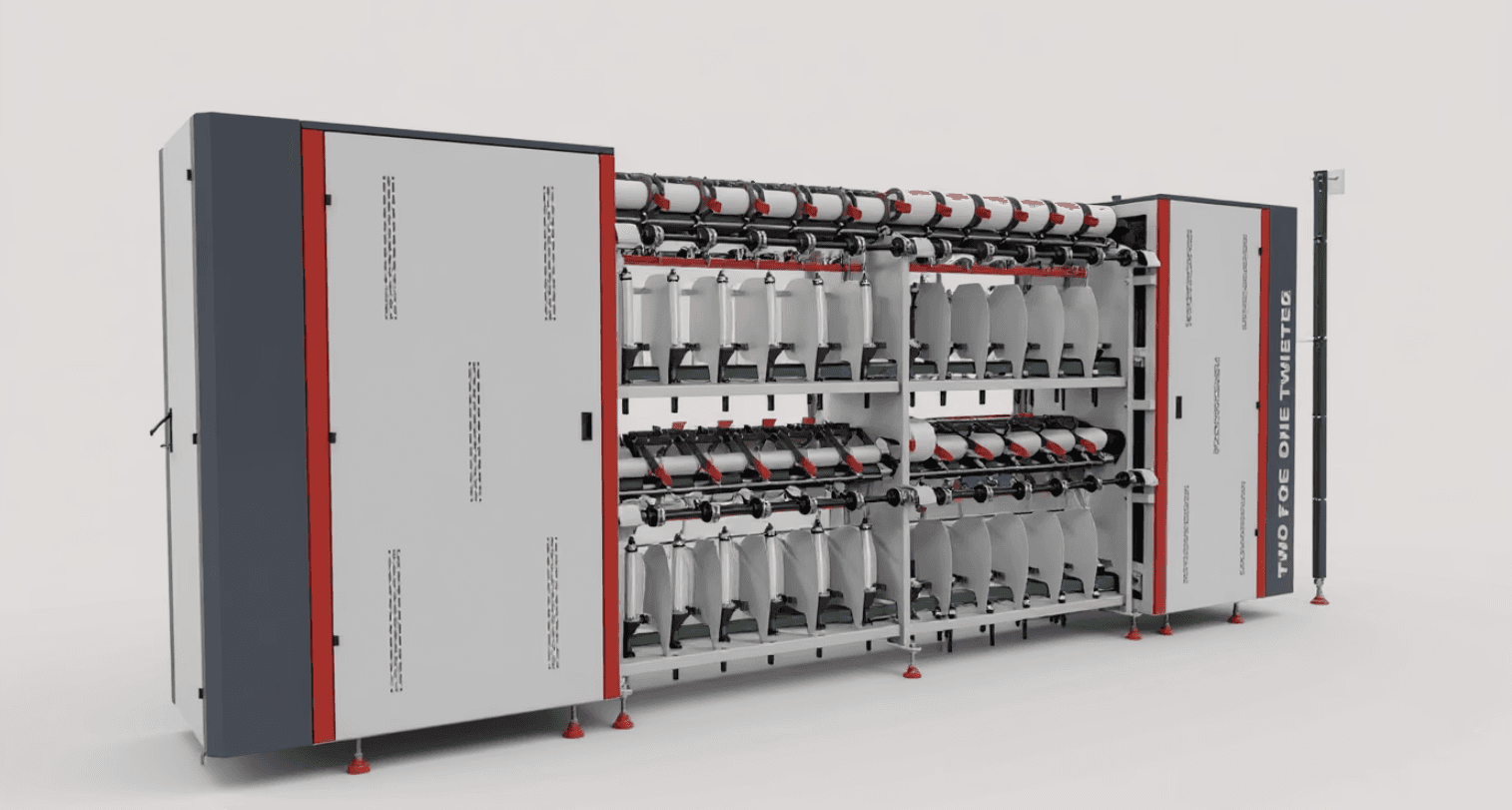
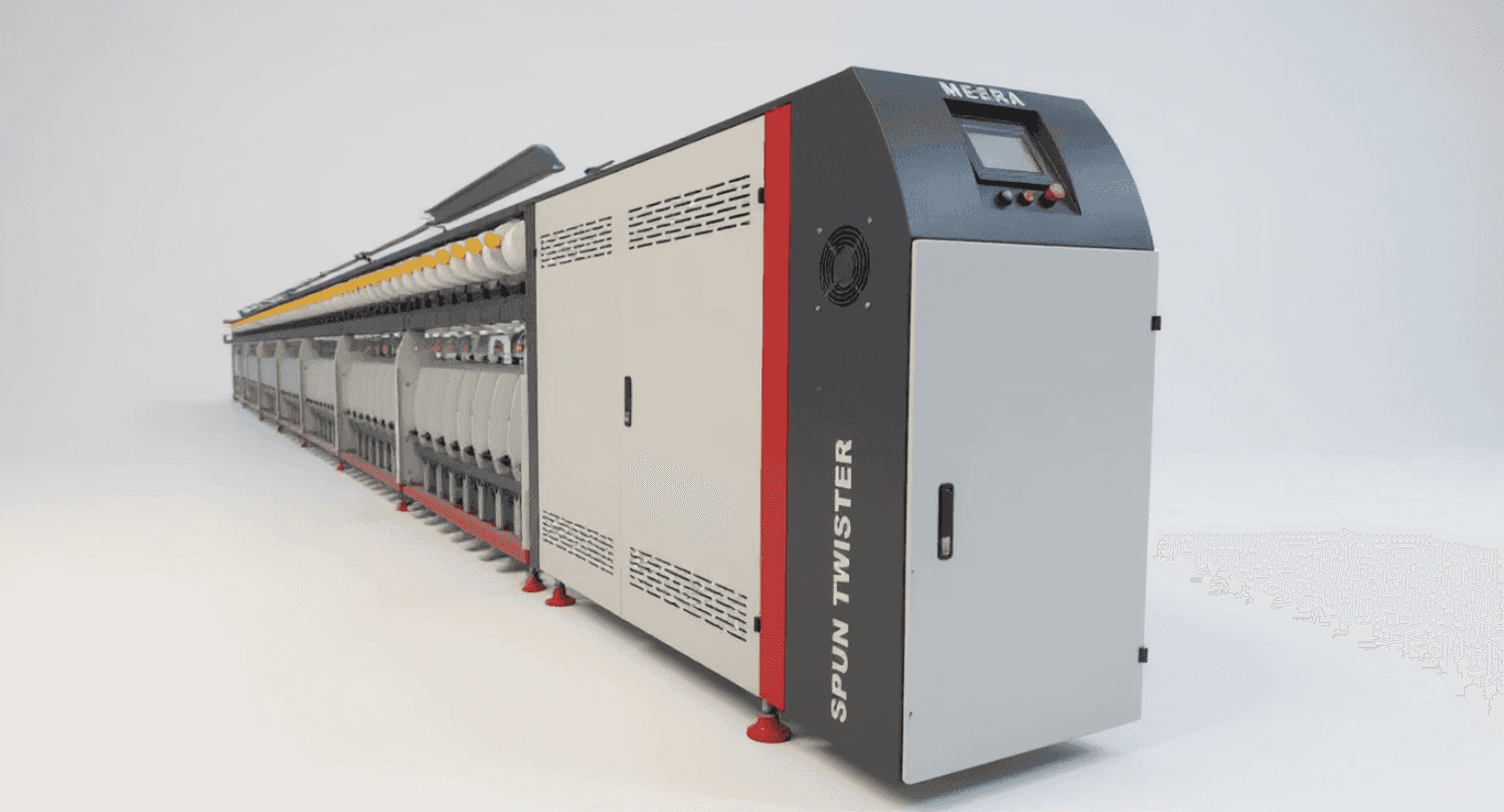
Industrial cabling utilizes automated systems, such as Two-for-One Twisters, for precise, high-speed production, while hand cabling provides tactile control for small-batch or specialty yarns.
Cabled yarn offers higher tensile strength, smoother surfaces, and sharper stitch definition. Its round profile ensures consistent machine performance and a clear, refined texture in fabrics.
Ideal for industrial threads, safety ropes, carpets, technical fabrics, and premium knitwear, cabled yarn combines long-term durability with superior visual and structural quality.
The Basics of Cabled Yarn
Cabled yarn is a highly engineered form of yarn construction that goes a step beyond traditional plied yarn. Instead of twisting single fibers once, the process involves multiple stages of twisting. And each stage is designed to add strength, stability, and definition to the final product.
A typical example is the 2-by-2-ply yarn, created by twisting two 2-ply yarns together in the reverse direction of the original ply. This structure yields a firm yet flexible yarn that retains its shape well during processing and use. It reduces pilling (the formation of small fiber balls on the fabric surface after friction). It also minimizes snarling (when yarn twists back on itself and forms loops or knots) and withstands repeated mechanical stress.
Visually, cabled yarn is easily identified by its spiral-like, corded appearance. This layered twist provides it with extra bulk and elasticity, enabling it to maintain consistent tension and structure throughout the fabric formation process.
Now, let's look at the two key twisting stages that define its structure and performance.
How Cabled Yarn Is Made by Twisting: The Fundamental Two-Step Process
The strength, roundness, and stability that define cabled yarn come from a precisely engineered two-step twisting and plying process. Each step is designed to balance internal torque, align fibers, and create a compact yarn structure that performs consistently across winding, weaving, and knitting operations.
Step 1: Forming the Base Plied Yarn
The process begins with single yarns (called singles) that are twisted together to create a plied yarn. This is the foundation for cabling.
Objective: To give the yarn body uniformity and preliminary strength.
Outcome: A stable intermediate yarn ready for the cabling stage.
Each single yarn receives a twist in one direction, either S or Z, depending on the machine's spindle rotation:
Twist Type | Appearance | Common Use |
S-Twist | Fibers slope like the center of an "S" | Used when the final cabling will be Z-twist |
Z-Twist | Fibers slope like the center of a "Z" | Used when the final cabling will be S-twist |
This first twisting step adds rotational energy (torque) to the yarn. However, it also leaves internal tension that can cause the yarn to twist back on itself (snarl) or curl if not neutralized.
Step 2: The Cabling Twist: Balancing the Torque
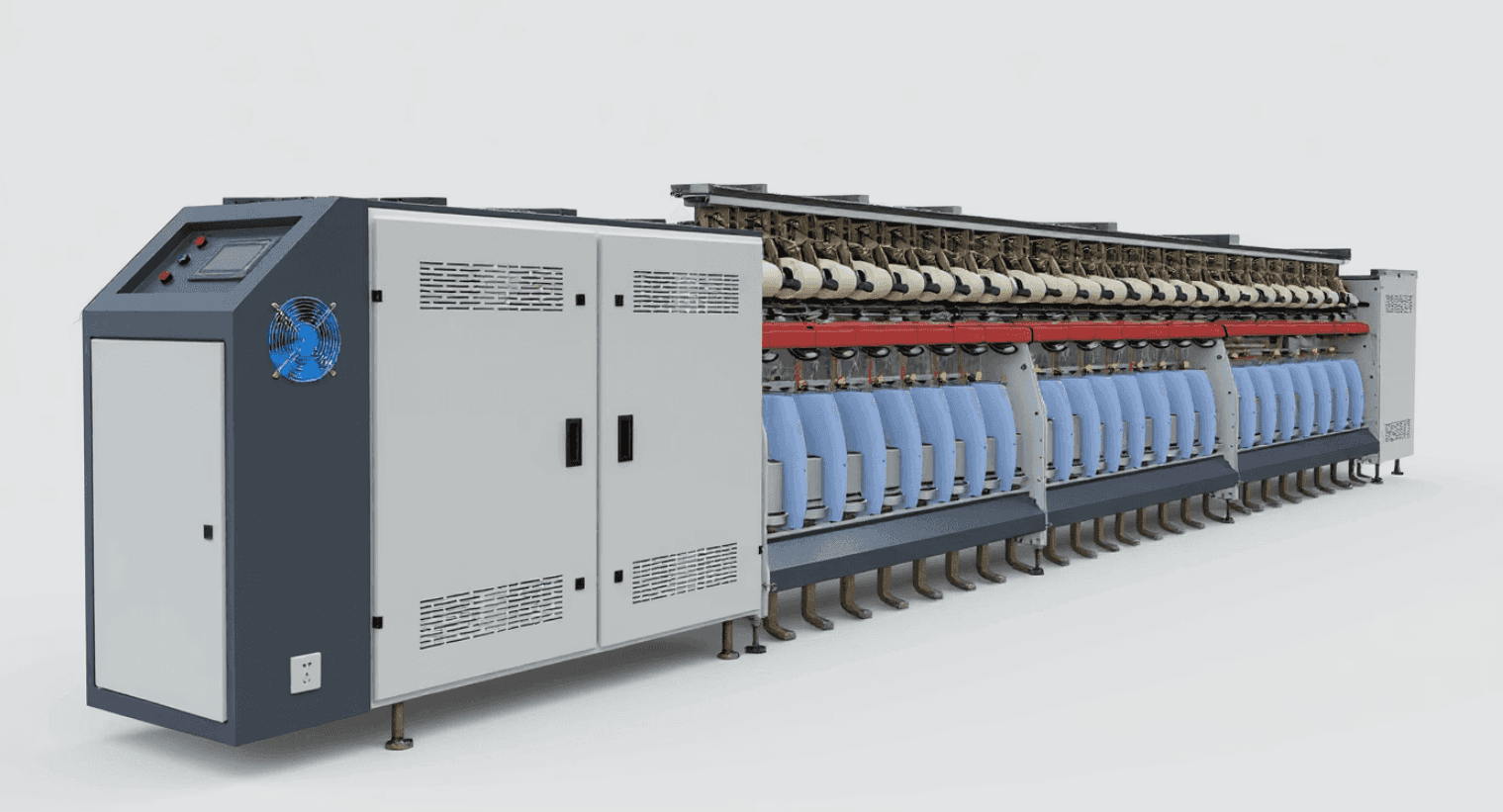
Next, two or more plied yarns are twisted together again, but this time in the opposite direction of the original twist.
For example:
If the singles were Z-twisted and the first plied yarns were also Z, then the final cabling twist will be S.
Conversely, if the singles were S-twisted, the final cable twist will be Z.
This reverse twist is the crux of the cabling process. It equalizes the rotational energy stored in the first twist, producing what's called a torque-balanced or torque-neutral yarn.
To summarize:
Stage | Process | Direction (say) | Result |
1 | Twisting singles into plies | Z-twist | Introduces torque and strength |
2 | Twisting plied yarns together | S-twist | Neutralizes torque and adds roundness |
By neutralizing torque, the cabling twist ensures the yarn remains dimensionally stable. It doesn't spiral or skew when tension is applied.
Why Torque Balance Matters in Production
In high-speed operations such as industrial thread manufacturing or technical fabric weaving, unbalanced yarns can twist unevenly under tension. That can further result in fabric distortion, uneven winding, or even machine stoppages. It can also lead to a phenomenon called seam puckering, where tiny wrinkles or ridges appear along stitched seams when the thread tension is unbalanced.
Balanced cabled yarn eliminates these issues by maintaining:
Directional stability (no twisting back).
Smooth unwinding from bobbins or cones.
Uniform dye absorption due to a consistent surface structure.
Pro Tip: To achieve a stable cable structure, maintain consistent twist per meter (TPM) between the plying and cabling stages. A general rule: the cabling twist should be slightly lower than the ply twist, enough to neutralize tension without over-tightening.
Balanced yarn ensures smooth processing and consistent quality. However, the method of creating it can vary depending on the scale and equipment. Let's look at industrial cabling and hand cabling approaches.
Industrial vs Hand Cabling: How Scale Shapes the Twist
While both methods share the same fundamental principle, the scale, precision, and control differ significantly. Industrial cabling relies on high-speed, automated systems that ensure consistent quality, while hand cabling depends on manual skill and tactile feedback.
Industrial Cabling: Precision Through Automation
In industrial settings, cabled yarn is produced using specialized twisting machinery designed to handle the complexity of multi-stage twisting with accuracy and speed.
A key machine used for this is the Two-for-One (TFO) Twister, which introduces two twists in the yarn for every spindle rotation, hence the name. This setup effectively doubles productivity compared to older ring-twisting technology while maintaining uniformity.
How it works:
Pre-plied yarns are mounted on stationary packages.
The yarn passes through a hollow spindle rotating at high speeds (up to 18,000 RPM).
As the spindle turns, the yarn forms a controlled "balloon" loop, allowing the operator to insert the counter-directional twist evenly.
Electronic tension control systems continuously regulate the yarn's delivery speed and tension. This ensures a precise and balanced twist per meter (TPM) throughout the entire production process.
This controlled environment prevents breakages, uneven tension, or over-twisting that often lead to quality inconsistencies in manual setups.
How modern TFO twisters enhance the process:
Modern TFO twisters incorporate energy-efficient spindle technology, ensuring long-term reliability and minimal maintenance. Meera Industries, for example, manufactures plasma-coated spindles in-house, engineered to have a lifespan exceeding 15 years, thereby minimizing power loss and extending operational life.
They also feature dual take-up systems:
Aluminum cylinders (up to 1 kg yarn weight) for durable, flanged packages, ideal for both wet and dry heat settings.
Paper tubes (up to 2.4 kg) for higher-capacity winding with minimal knotting.
Additional performance-driven features include:
Oil-bath gearboxes for smooth high-speed operation and reduced wear.
Anti-patterning mechanisms to prevent uneven yarn buildup.
Electronic droppers for instant yarn-break detection and centralized monitoring.
Ceramic overfeed rollers to maintain uniform package density.
Remember, inconsistent twist density or tension loss can slow production and raise rejection rates. Meera Industries' precision TFO systems help you maintain torque balance, achieve uniform TPM, and minimize yarn breaks.
Contact us to learn how precision cabling can minimize downtime and improve output consistency.
Also Read: Guide To Modern Types Of Twisting Machines
Hand Cabling: The Traditional Craft Approach
On the other hand, hand cabling, still used by artisans, sampling units, or R&D labs, relies entirely on manual control. The process mirrors industrial cabling in concept but requires more time, skill, and physical handling of yarn tension.
Typical sequence for hand cabling:
Spin four bobbins of singles in the Z direction (right-hand twist).
Combine two singles and ply them in the S direction (left-hand twist) to create a 2-ply yarn. Repeat for the remaining two bobbins.
Feed each 2-ply yarn back through the wheel in the same S direction to add extra ply twist and stabilize the structure.
Finally, cable the two 2-ply yarns together in the Z direction (reverse twist) to complete the torque balance.
This hands-on approach allows artisans to control the yarn's feel, elasticity, and surface finish. It's ideal for specialty or custom textile samples where precision in small batches is crucial. However, it's slower and less consistent than automated cabling, making it impractical for large-scale production.
Both methods ultimately aim for the same outcome: perfectly balanced, high-performance yarn. Once the cabling process is complete, the advantages of this unique construction become truly evident.
What Makes Cabled Yarn Superior (Key Advantages)
Cabled yarn stands apart for its balanced structure, lasting strength, and refined surface finish. Built through precise counter-twisting, it delivers a rare combination of durability and design clarity.
Here's why it stands apart:
1. Strength That Withstands Stress
The multi-ply, reverse-twist construction gives cabled yarn a high tensile capacity, allowing it to endure continuous tension, bending, and friction without fraying or breaking.
This durability makes it ideal for demanding uses such as:
Industrial sewing threads and safety cords
Carpet yarns and automotive interiors
Heavy-duty garments and protective fabrics
Because every layer of twist reinforces the next, cabled yarn maintains consistent strength throughout its length. You benefit from fewer breakages, smoother machine runs, and a more reliable end product.
2. Smooth Surface and Low Pilling
Cabled yarn's dense, compact structure locks fibers firmly in place, preventing them from rising to the surface and tangling into small balls, or pills. This smoothness helps fabrics stay neat and uniform, even after prolonged use.
It also minimizes fiber migration, keeping the surface clean and consistent over time. That appearance is required in textiles where appearance matters, such as:
Upholstery (padding in sofas, armchairs, etc.)
Uniforms
Premium knitwear
3. Defined Texture and Visual Depth
The perfectly round cross-section of cabled yarn creates excellent stitch definition, allowing every loop and pattern to stand out clearly. This quality makes it a favorite for:
Fabrics that highlight texture, such as Aran cables or structured weaves
Garments like sweaters and scarves
In knitting, stitches appear as clean, vertical columns with crisp edges, giving the fabric a professional and polished look. The added density also produces a soft, graceful drape in larger garments and blankets.
Also Read: Effects of Yarn Twist on Strength and Quality
How Meera Industries Can Help You Produce High-Performance Cabled Yarn
As demand grows for stronger, smoother, and more stable yarns, precision cabling technology has become essential. The way cabled yarn is made by twisting depends significantly on the machinery that can maintain a perfect balance between speed, torque, and tension. And that's something Meera Industries has mastered over the course of decades of innovation.
As a global leader in yarn twisting and cabling solutions, we enable manufacturers to achieve consistent, high-quality output with minimal energy consumption and downtime.
Here's why leading manufacturers choose us:
Experts in Yarn Twisting Technology: Meera's advanced TFO Embroidery Thread Twister and Direct Cabler Machines ensure uniform twists, precise tension, and torque balance.
Global Reach, Proven Reliability: Exporting to more than 25 countries, including Germany, the USA, Turkey, and Bangladesh, we support textile producers worldwide with dependable, high-performance machinery.
Built for Versatility: Our machines maintain consistent tension and twist precision across a wide range of yarn types, including cotton, polyester, polypropylene, viscose, nylon, and technical fibers. The technology supports many industrial threads, carpet yarns, embroidery yarns, fancy yarns, and high-tenacity filaments alike.
Driven by Research and Quality: Certified to ISO 9001 and recognized by the Department of Scientific and Industrial Research (DSIR), we continually advance our technology to meet the changing standards of modern textile manufacturing.
Looking to enhance your yarn performance and production efficiency in both domestic and export markets? Contact us today to explore the ideal cabling and twisting solutions tailored to your yarn type, process requirements, and business objectives.
Frequently Asked Questions
Q: What is the difference between cabled yarn and plied yarn?
Plied yarns are made by twisting single fibers once, while cabled yarns undergo a second twisting stage in the opposite direction. This added step balances torque, increases strength, and enhances the yarn's shape stability and resistance to wear.
Q: What are the key quality checks during cabled yarn production?
Manufacturers monitor parameters like twist uniformity, torque balance, yarn evenness, and surface finish. Automated tension sensors and electronic droppers in modern cabling systems detect irregularities early, ensuring consistent quality across every package.
Q: How does heat-setting affect cabled yarn?
Heat-setting stabilizes the twist structure and relieves internal stresses, helping the yarn retain its shape during processing. It also enhances smoothness and reduces twist liveliness, making it ideal for high-speed winding and weaving operations.
Q: What industries benefit most from using cabled yarn?
Cabled yarn is widely used in automotive textiles, safety ropes, carpet manufacturing, industrial sewing, and outdoor gear. Generally, it is ideal for applications that demand durability and structural integrity.
Q: Can cabled yarn be made from any type of fiber?
Yes. Both natural fibers (cotton, wool) and synthetic materials (polyester, nylon, polypropylene) can be cabled. The key lies in adjusting twist levels, spindle speed, and tension according to the fiber's length, elasticity, and intended end-use.